Clinical
Training
Children’s Health Dallas
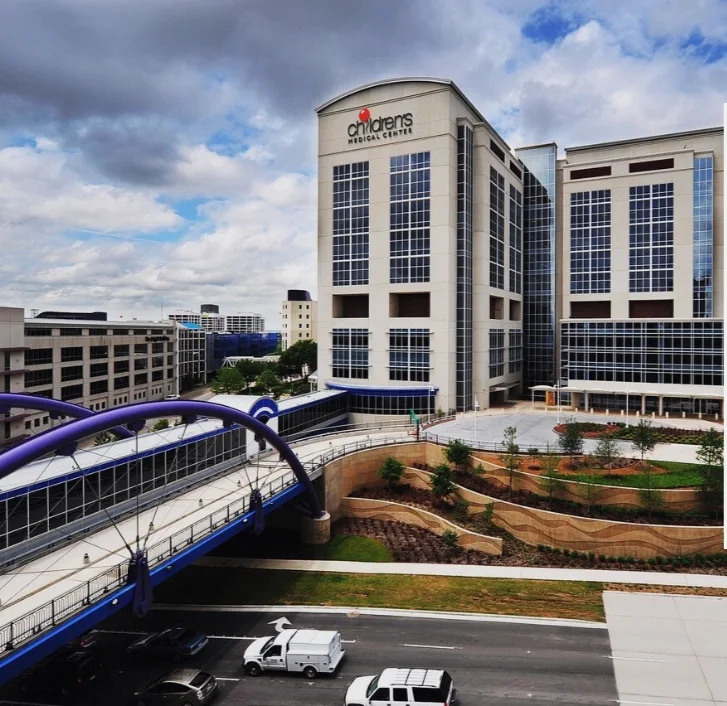
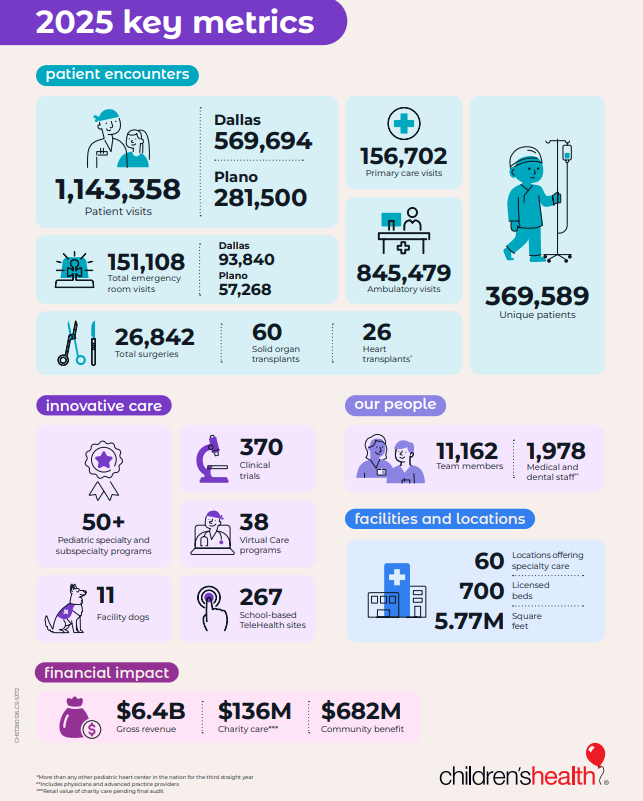
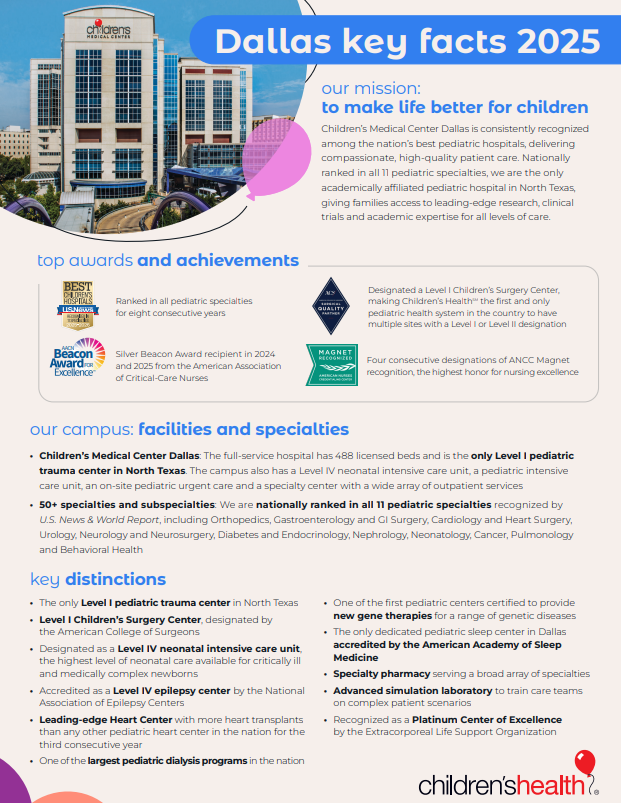
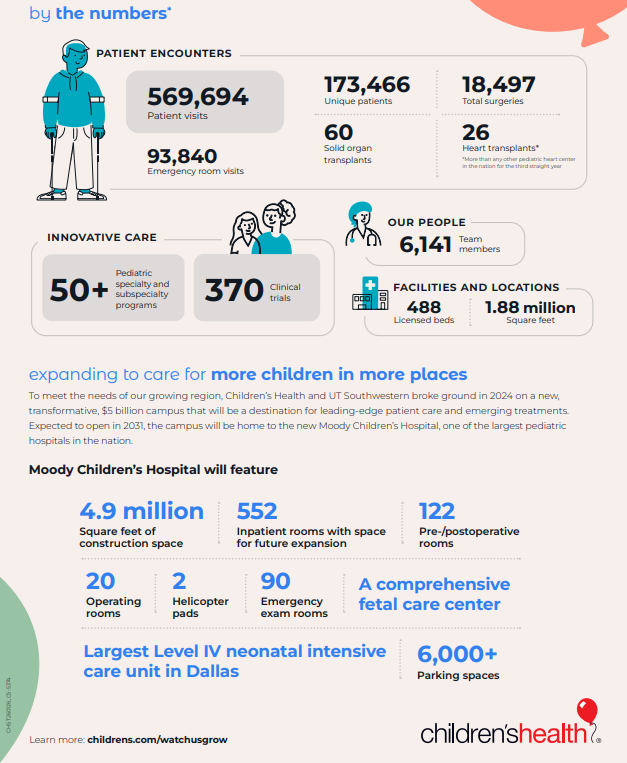
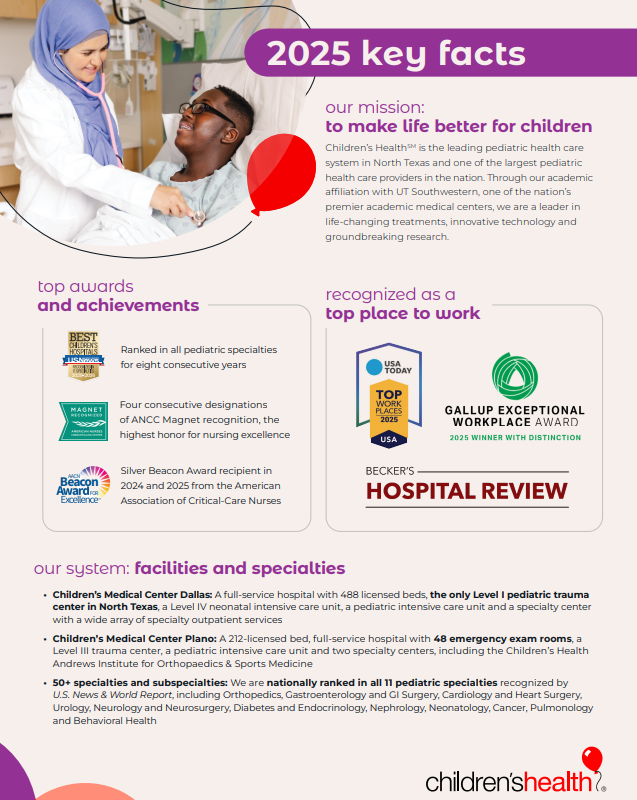
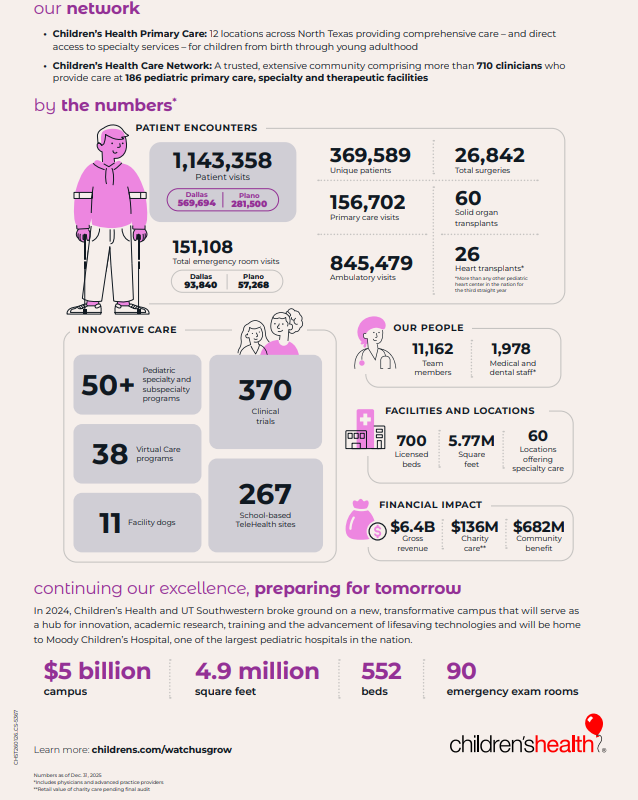
Clinical training is at Children’s Health Dallas, the flagship hospital of the leading pediatric health care system in North Texas. The 490-bed hospital is ranked in all 10 pediatric specialties by the US News and World Report. The video here outlines the many opportunities and growth of Dallas and the new hospital.
We recently transitioned to a primarily night float system. Night shifts and calls are accounted for in the total months listed above. Vacation can be taken during research time.
Fellows have the opportunity to tailor their clinical rotations to meet their individual career goals by adding electives. Examples include: anesthesia, palliative care, and transport.
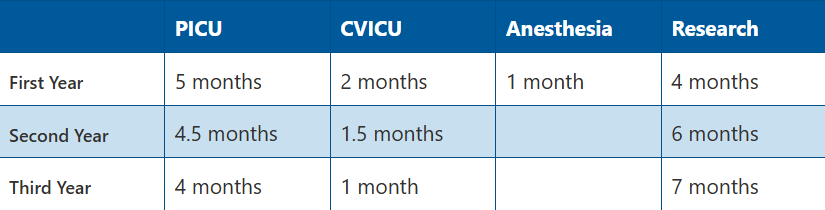
Below is the typical breakdown of rotations during the three-year fellowship:
Non-Standard Pathways:
In addition to the standard three-year Fellowship Program, we offer two-year advanced training program positions and dual subspeciality training. For more information on these non-standard training pathways please visit the American Board of Pediatrics site here. Please let program leadership know if you are interested in either of these options.
UT Southwestern has a unique opportunity in the Clinical Informatics Fellowship where physicians interested in becoming leaders in the development and implementation of clinical information systems can complete a two-year ACGME accredited training program or explore integrated training experiences. For more information about the program please visit their site here.
PICU
Our 44-bed PICU was recently remodeled and serves a broad range of critically-ill children from across the state of Texas.
When on service in the PICU, fellows supervise residents and/or APPs on teams A, B, and C for one week at a time (Mon-Sun). These team fellows take one in-house call each week (Fri, Sat, or Sun). In 2024, we transitioned to a night float system with 2 fellows on nights in PICU Mon-Thurs - thus allowing for increased protected research weeks, continuity of care at night, and peer learning (including procedures) with 2 fellows on together. In 2026, we added a 2nd fellow night float Fri-Sun (paired with on call fellow), so our PICU has 2 fellows on at night 7 nights/week. Fellows have an average 6 weeks/year for Mon-Thurs night float and 2-4 weekends/year of Fri-Sun night float. Fellows acting in a senior fellow role in the PICU have no in-house call responsibilities during the block.
Makenna Paradowski, PGY 5, tours the PICU
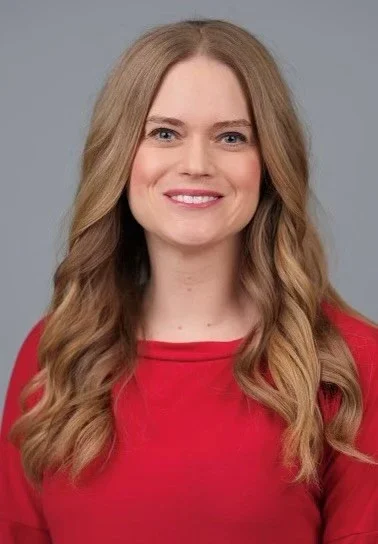
Amy Lee, MD MS
Medical Director, PICU Dallas Campus
“We are delighted you are considering UTSW!
As medical director (and graduate of our program!), I’m happy to tell you more about our big, busy Dallas PICU. We have 52 PICU beds across three physical floors, and care for approximately 3000 children a year, with an excellent survival rate. Our fellows are essential in caring for our high acuity, complex patients, which arrive here at Children’s from across North Texas (and at times beyond!) It’s a privilege to be a part of another physician’s training, and here in Dallas we truly value training our fellows and the contribution they make to the care of the children in our community. With a high-volume center such as ours, which is also a level 1 trauma center and a high volume ECMO center, there’s no shortage of learning opportunities. On average, 50 procedures are done by our fellows in the unit on any given month, allowing for strong procedural competence at the end of your training. One of the favorite parts of my job is watching the fellows grow throughout their training- from the first year when they are just learning the ropes, to their final months of training, where they manage the team nearly independently. Training here truly provides one with the clinical and procedural expertise needed to excel as an intensivist.”
CVICU
The 32-bed state-of-the-art cardiovascular intensive care unit (CVICU) provides care for children with congenital heart disease as well as other cardiac diseases. Fellows spend a significant portion of their training in this unit, learning how to care for complex congenital heart disease. The unit has an active heart transplantation service (busiest in the country, 2 years running) as well as a VAD program (including single ventricle VADs). Fellows interested in a career in cardiac intensive care medicine may pursue an additional year of training in the CVICU.
In the CVICU, 1st and 2nd year fellows work in a front-line provider role for 2-week rotation blocks, with 10 shifts over 14 days. Two of those blocks each year have a week of nights. Third year fellows act in a team supervisor role during their rotations (typically 1-2 weeks, Mon-Sat, for 4 weeks total), with now front-line or nights requirement.
Dr. Joshua Wolovits, medical director of the CVICU, talks about the 32-bed CVICU
ECMO
Critical care fellows play a fundamental role in our large ECMO program. Dr. Ethan Sanford, medical director of ECMO, discusses features of the program.
In 2025, Drs. Erin Tresselt (director), Alicia Wiliams (assistant director) and Peter Luckett launched the EMPOWER program (Embracing Monitoring and Post-ICU care, Wellness, and Recovery). This new multi-disciplinary clinic, supported by PCCM, PM&R, Neuropsychology and Social Work, currently sees patients with a lifetime history of ECMO support.
POCUS
In conjunction with fellowship and division leadership, Dr. Sarah Ginsburg developed the critical care point-of-care ultrasound (POCUS) program for the division. Fellows receive didactics in diagnostic POCUS (cardiac, thoracic and abdominal applications) throughout their three years. Procedural ultrasound teaching starts from week one of first year orientation. Fellows are encouraged to participate in hands on scanning time with POCUS credentialed faculty and then apply those skills to patient care. Clinical scans (both images and interpretations) are integrated into the EMR. We have created a process to track fellow progress and provide a summary for your skills post fellowship. Many of our fellows have taken advantage of our funding for meetings to attend POCUS courses. There are also opportunities to participate in POCUS related research projects. We hope this skill development both benefits fellow education and helps to advance patient care in the ICU.
Dr. Sarah Ginsburg
Fellow Bootcamp
We are very proud to have been selected as a regional site for the boot camp started by the Children's Hospital of Philadelphia. We were happy to host first-year fellows and faculty from Dell Children's Hospital (UT-A), University of Texas - San Antonio, Texas Children's Hospital, University of Oklahoma College of Medicine, and Primary Children's Hospital (Utah) as well as our own program. This is a great opportunity for fellows to get exposure to simulated codes, acute situations, airway management, line placement, ultrasound, career development, and personal growth. We are excited to expand the site and hope to hold more fellows in years to come.
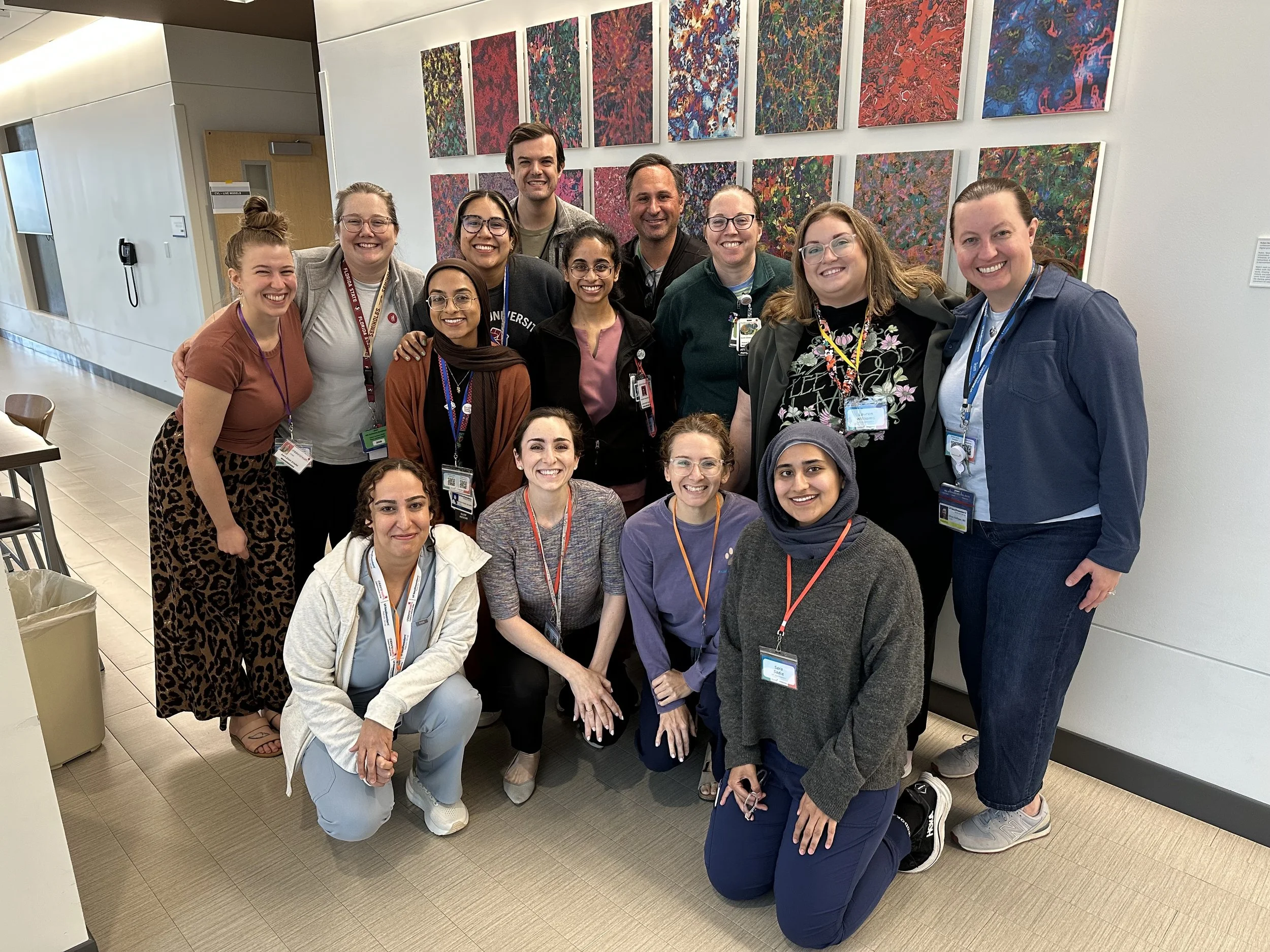
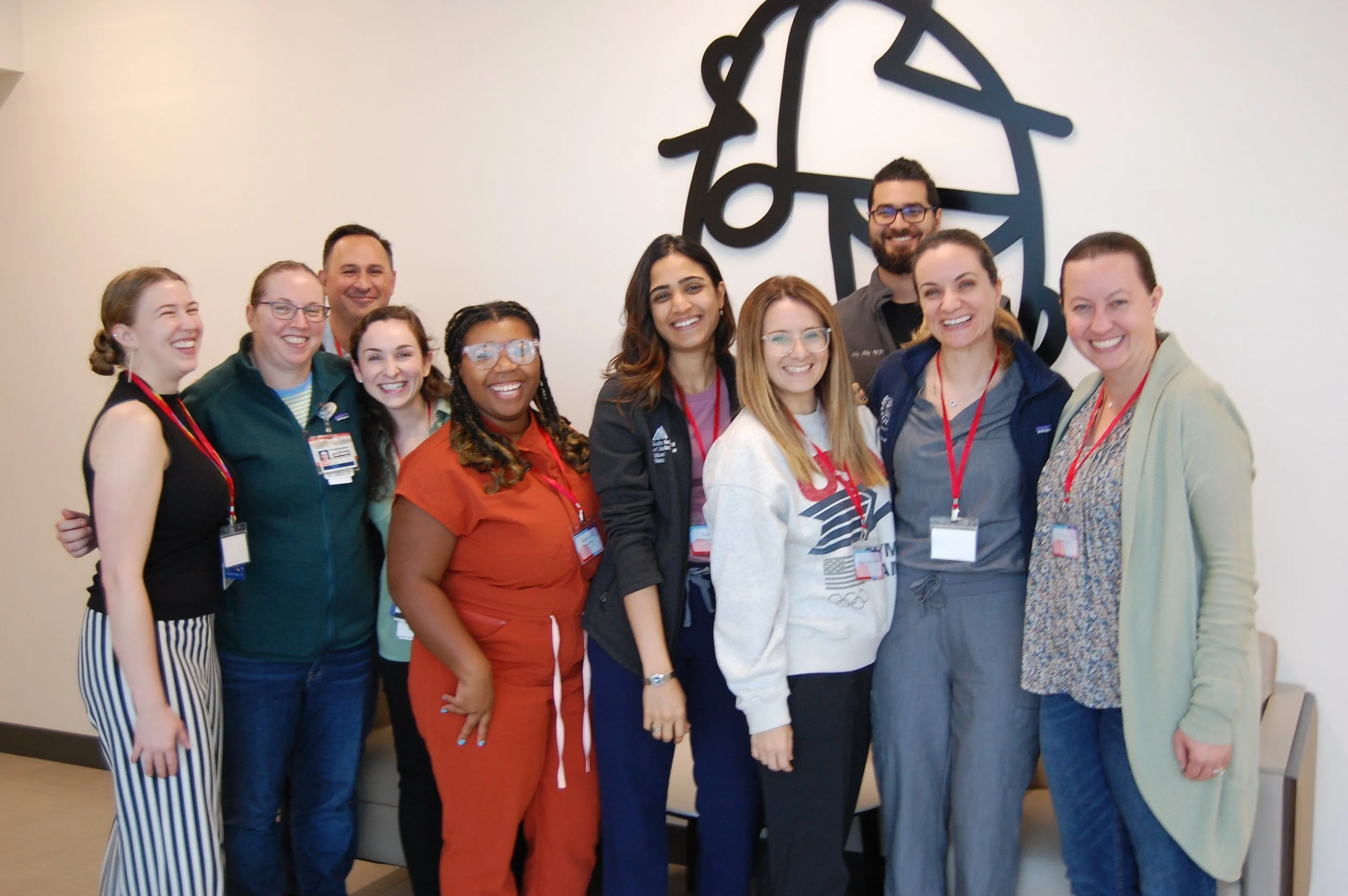
Class of 2026-2029 Fellows
From left to right: Top Row: Kayleigh Stark, Jessica Corners, Rabia Pirzada, Nicole Adams, Nathaniel Chohrach, Amaryllis Fernandes, Sam Davila, Sarah Ginsburg, Lauren Williams, Olivia Hoffman Bottom Row: Nur Selek, Anna Silberman, Alicia Williams, Sara Sadiq
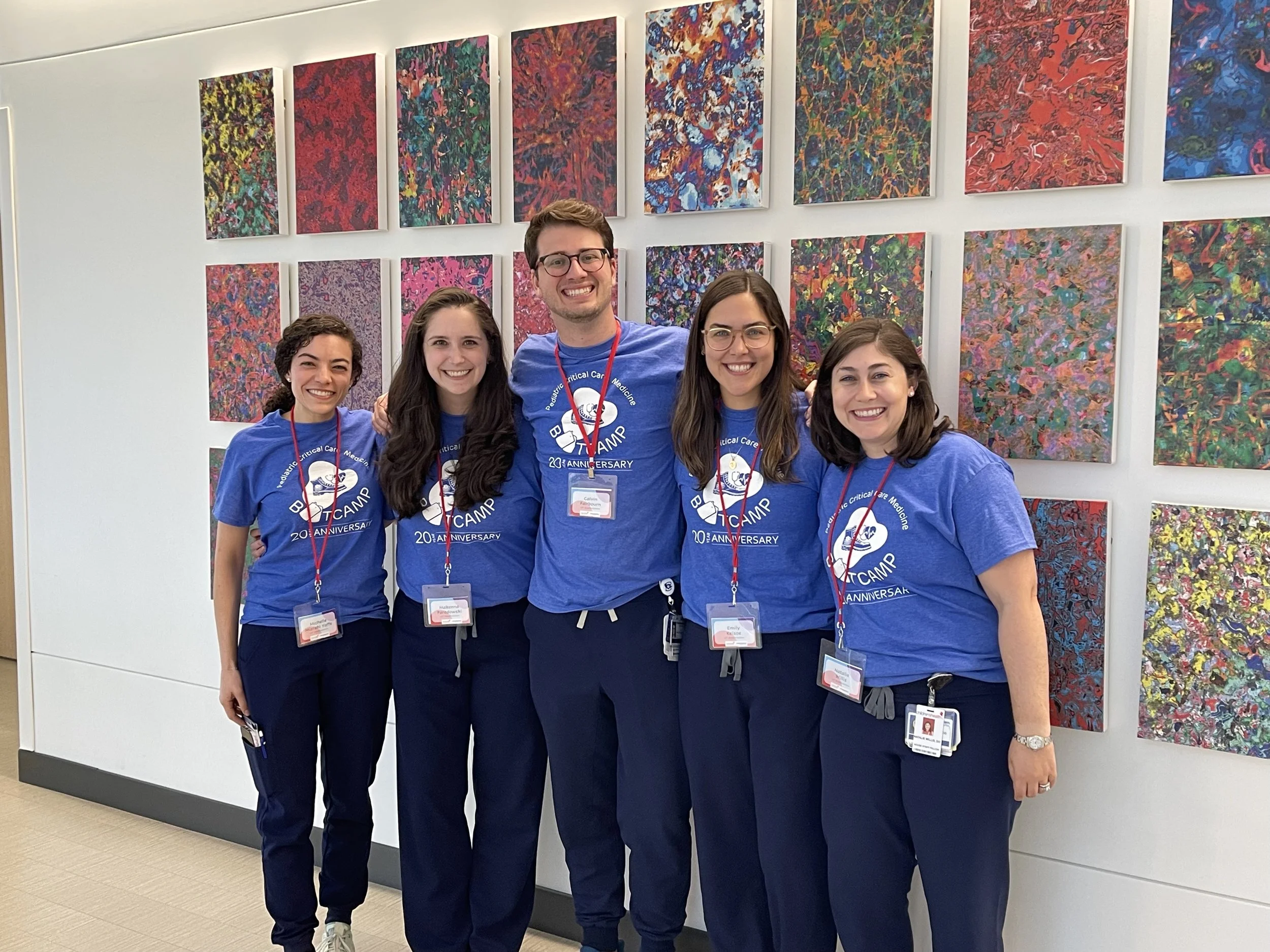
Class of 2025-2028 Fellows
From left to right: Michelle Mizrahi Yaffe, Makenna Paradowski, Calvin Fairbourn, Emily Kelsoe, Natalie Willis
Class of 2024-2027 Fellows
From left to right: Kayleigh Stark, Sarah Ginsburg, Sam Davila, Anna Silberman, Shekinah Vaughn, Sukaina Furniturewala, Alicia Williams, Aly Aly, Maja Stanojevic, Olivia Hoffman
Didactic Curriculum
Our program prioritizes fellow education with evolving didactics, simulation and plenty of teaching opportunities. We have two protected fellowship didactic sessions a week with many other conferences available to attend.
Fellow Professional Development Series (Mondays 1:00pm-2:00pm): covers topics such as Medical Ethics, Board Review, Quality Improvement, Ultrasound, CV and Cover Letter preparations, Hands on Sessions (e.g. ECMO wet lab, difficult conversations simulation).
Fellow Core Didactics (Thursdays 7:30am-8:30am): covers topics outlined on the American Board of Pediatrics Pediatric Critical Care Medicine content outline.
Monthly fellow-led presentations for Critical Care Medicine Division (Wednesdays 1:00pm-2:00pm): Fellows' Works in Progress (1st), Hot Topics (2nd), and Journal Club (4th)
Fellow Simulation (usually Thursdays 2:00-3:30pm)
Critical Care Medicine Division conferences: PICU Case Conference (Tuesdays 1:15pm-2:15pm), Quality/Morbidity (2nd Wednesday 12pm-1pm), Morbidity and Mortality (3rd Wednesday 12pm-1:30pm, fellows present)
Department of Pediatrics conferences: Multidisciplinary Case Conference (Tuesdays 12pm-1pm), Grand Rounds (Wednesdays 8am-9am)
Cardiac ICU conferences: Weekly Case Discussion (Thursdays 1pm-2pm), Heart Center Surgical Discussion (7:10am-9am), CVICU Hot Topics and Journal Club (2nd Thursday 12pm-1pm, alternating), CVICU Guidelines/QI/Research Meeting (3rd Thursday 12pm-1pm), CVICU Morbidity and Mortality (4th Thursday 12pm-1pm)